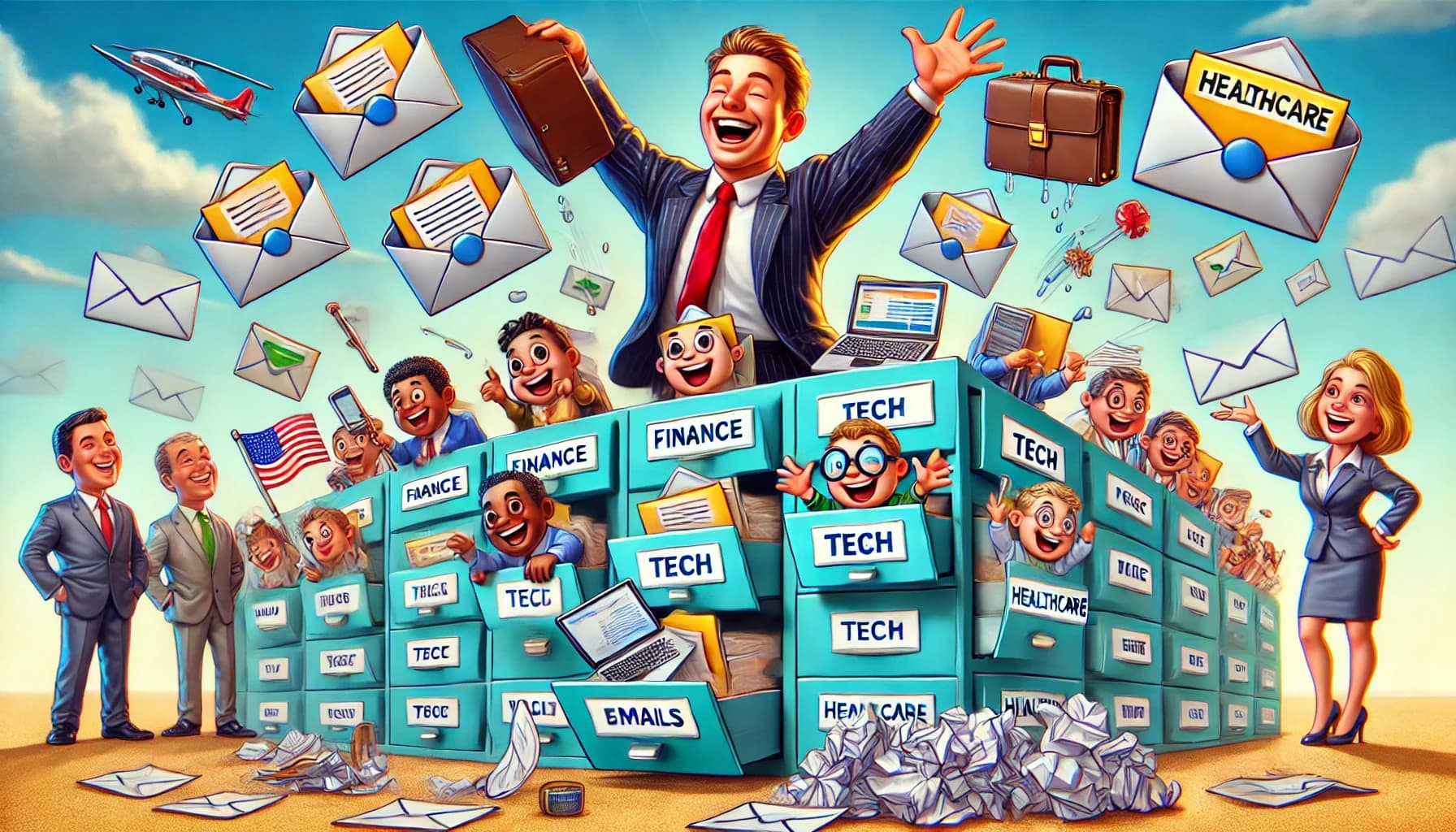
In B2B marketing, the days of blasting the same email to an entire list are long gone. Today, the most effective email campaigns are those that connect deeply with specific audiences. Business decision-makers respond best to personalized and relevant messaging—the kind that shows you understand their unique challenges and goals. That’s where segmentation and audience targeting come into play.
By dividing your audience into meaningful groups, you can create cold email campaigns that truly resonate, driving higher engagement and conversions. This article explores how customer segmentation and audience targeting can improve your B2B cold email results, the criteria you should use, and practical steps to implement this strategy in your campaigns.
Customer segmentation involves categorizing your audience into distinct groups based on shared characteristics like industry, behavior, or intent. This process helps you deliver more relevant messaging to each group. Audience targeting takes this a step further, enabling you to focus on specific segments most likely to respond to your emails and convert.
Why Segmentation and Targeting Are Critical for B2B Cold Emails
- Delivers Relevance: Tailored emails address specific pain points, making recipients more likely to engage.
- Enhances Engagement: Messaging aligned with a recipient’s role, industry, or behavior increases open rates, click-through rates, and responses.
- Improves ROI: Focused targeting ensures resources are allocated toward prospects with the highest likelihood of conversion.
- Why It Matters: Different industries have unique challenges and opportunities.
- Example: For healthcare companies, emphasize compliance and data security. For tech startups, highlight scalability and innovation.
2. Job Role and Decision-Making authority
- Why It Matters: Understanding how a prospect interacts with your brand (e.g., visiting your pricing page) provides valuable clues about their intent and readiness to engage.
- Example: Send a follow-up email to leads who recently downloaded a case study, offering to answer questions or schedule a demo.
4. Company Size
- Why It Matters: Location impacts time zones, business practices, and regulatory considerations.
- Example: For a European audience, reference GDPR compliance. For U.S.-based companies, highlight local success stories.
- Collect and Organize Data
Use tools like CRMs, website analytics, and LinkedIn to gather data on your prospects. Categorize them by industry, role, behavior, and other relevant criteria. - Define Segmentation Goals
Identify which segmentation criteria align best with your campaign objectives. For example, if you’re promoting a SaaS product, focus on job role and behavioral intent. - Develop Targeted Messaging
Craft email copy that speaks directly to each segment. Personalize subject lines, body text, and CTAs to reflect the unique pain points and goals of each group. - Test and Refine
Use A/B testing to experiment with subject lines, CTAs, and content variations within each segment. Continuously refine your approach based on performance metrics like open rates and conversions.
- Goal: Re-engage leads who visited your website’s pricing page.
- Approach: Send targeted follow-ups addressing pricing concerns and offering a free consultation.
- Result: Higher conversion rates due to timely, relevant outreach.
2. Job Role Segmentation
- Goal: Promote a project management tool.
- Approach: Segment by industry and address pain points like compliance for healthcare and resource management for construction.
- Result: Improved response rates by highlighting industry-relevant benefits.
Segmentation and audience targeting are transformative tools for B2B cold email campaigns. By dividing your audience into meaningful groups and crafting personalized messages, you can create a more engaging experience that drives measurable results. Start by gathering data, defining your segments, and tailoring your outreach. With continuous testing and refinement, you’ll tap into the full potential of personalized email marketing.
Ready to revolutionize your cold email strategy? Start segmenting your audience today and watch your engagement and conversions soar.


